Beginner's Guide to Buying Vintage Rugs for Period Homes
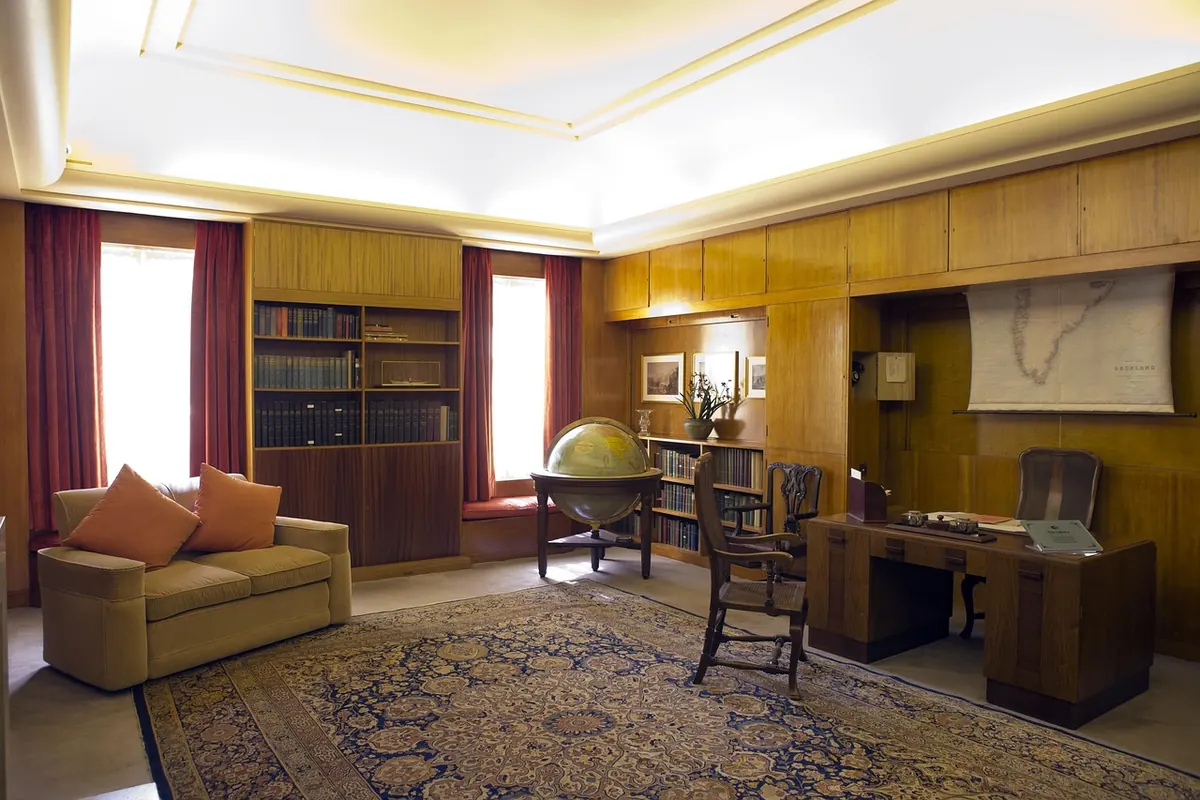
A period home asks a lot of a floor. Original boards, encaustic tiles, a fireplace that has seen two centuries of soot — and then you roll out something new and uniform, and the room goes quiet in the wrong way. An old rug tends to settle in instead, as though it had always been there.
Buying one is a different exercise from buying new. The sizes are irregular, the colours have already softened, and nobody wove it to match your paintwork. That is the charm of it, but it does mean you need to measure carefully and look closely before handing over any money. Here is how to go about it.
Measure the room before you fall in love
Vintage rugs come in a narrow range of shapes, and rarely in the exact size you had in mind. You will mostly meet small mats around 90 x 150 cm, runners roughly 70–90 cm wide and three or four metres long, and room sizes from about 200 x 300 cm upwards. Plenty are still described in imperial measurements, so a 9 x 12 ft rug is around 275 x 365 cm.
Because hand-knotted rugs are made on a loom, they are often slightly out of square, and the measurements given may be a few centimetres out. Always measure the floor at its widest and narrowest points — old walls are seldom parallel — and then apply a few rules of thumb:
- Around seating: the front legs of the sofa and armchairs should sit on the rug; back legs can stay on bare boards.
- Under a dining table: allow at least 60 cm of rug beyond each edge so chairs stay supported when pulled out.
- In a hallway: leave 15–20 cm of visible floor or tile either side, and check door swings and radiator clearance before you commit.
- In a room with a fireplace: centre the rug on the hearth and seating, not on the four walls. Period rooms are often longer than they are wide in usable floor space.
Take a photograph of the empty floor with you when you go to view, along with a tape measure and the door-swing measurement. It sounds fussy; it saves a lot of disappointment.
Materials that suit old houses
What a rug is made of decides how it will wear, how it feels underfoot and how it reacts to a wash.
- Hand-knotted wool — the classic choice for period interiors. Dense, warm and long-lasting, and the dyes fade in a way that usually flatters. Expect some shading where the pile has been walked on.
- Flatweave wool (kilim) — thinner, lighter and often geometric. Good under furniture in smaller rooms, and easier to hang or move. It has no pile to hide wear, so any damage shows.
- Cotton dhurrie — flat, reversible and forgiving. Useful in busy hallways and kitchens, though it will not soften the sound of a bare floor much.
- Silk or silk-blend — beautiful, delicate, and best kept away from doorways and high traffic. Often used as highlights within a wool rug.
- Jute, hemp and goat hair — rougher and more rustic, ideal for a boot room, garden room or utility space where a fine wool rug would be wasted.
In a period property, wool is usually the safest bet: it insulates against cold boards, takes an underlay well and ages gracefully.
Reading condition in five minutes
Lift the rug so light falls across it from a window, then crouch down and look along the surface. Worn patches, repairs and areas of flattened pile appear at once when you view a rug at a low angle. Then work through the following.
- Pile: check for bald patches, especially along the edges and in the middle where feet land.
- Foundation: bend a corner gently. The backing should feel firm and slightly pliable, not brittle or crunchy.
- Edges and ends: the selvedge and fringes take the first damage. Rewrapping an edge is routine; a fringe that has pulled away across the width is more serious.
- Moth and rot: small clean holes, fine sandy dust when you tap the back, or a foundation that crumbles between your fingers are all reasons to walk away.
- Colour: look for uneven fading, dye that has bled into paler areas, or paint and bleach splashes.
- Smell: damp, smoke and pet odours are difficult to shift and often signal storage problems.
A loose fringe, a small repair or a worn edge is normal in a rug of any age. A failing foundation is not. If the rug is genuinely old and valuable, ask a specialist restorer for an opinion before you buy and certainly before you attempt any cleaning at home — an amateur wash can flush the dyes and cause damage that costs more to put right than the rug is worth.
Styling it in a period room
Let the architecture lead. Georgian and Victorian rooms generally carry richer, deeper patterns well — madder reds, indigo and soft gold sit comfortably against panelled walls and dark joinery. Edwardian and 1930s houses often suit lighter, more geometric flatweaves. A long runner down a tiled Victorian hallway should sit centred, with a band of tile on show at both sides; covering the lot makes the space look narrower.
Watch the competition between pattern and pattern. A busy rug beneath busy wallpaper can feel hectic, so either keep a plain border of floor between them or choose a quieter rug. Layers work beautifully: a small, faded rug on top of a large neutral sisal or jute gives a period room depth without committing to wall-to-wall carpet. If you have strong colour on the walls, an aged, muted rug will calm it; if the scheme is pale, a rug with depth carries the room on its own.
Buying well: questions worth asking
Antique dealers, house clearance sales, salvage yards and online marketplaces all turn up good pieces. Wherever you buy, ask for the rug to be photographed lying flat in daylight, with a shot of the reverse as well. Ask what it has been cleaned with, whether it has been trimmed or repiled, and what the return arrangement is. Confirm delivery details before agreeing — a large rug will not make a tight turn on a narrow Victorian staircase, and it may need to come in over a balcony or through a window.
Living with a vintage rug
Good rugs reward a little care. Fit an underlay to stop it slipping and to protect the pile from grit. Vacuum gently with a suction head rather than a beater bar, and rotate the rug twice a year so the wear is even. Keep it out of direct sunlight where you can and blot spills straight away rather than rubbing. Every few years, have it cleaned professionally, and deal with any moth activity as soon as you spot it.
Buy slowly, measure twice, and be willing to wait for the right size. The rug that suits a period home is rarely the one that arrives fastest.
Photo: RonPorter / Pixabay