What Is Biophilic Design and How Can You Use It in a British Home?
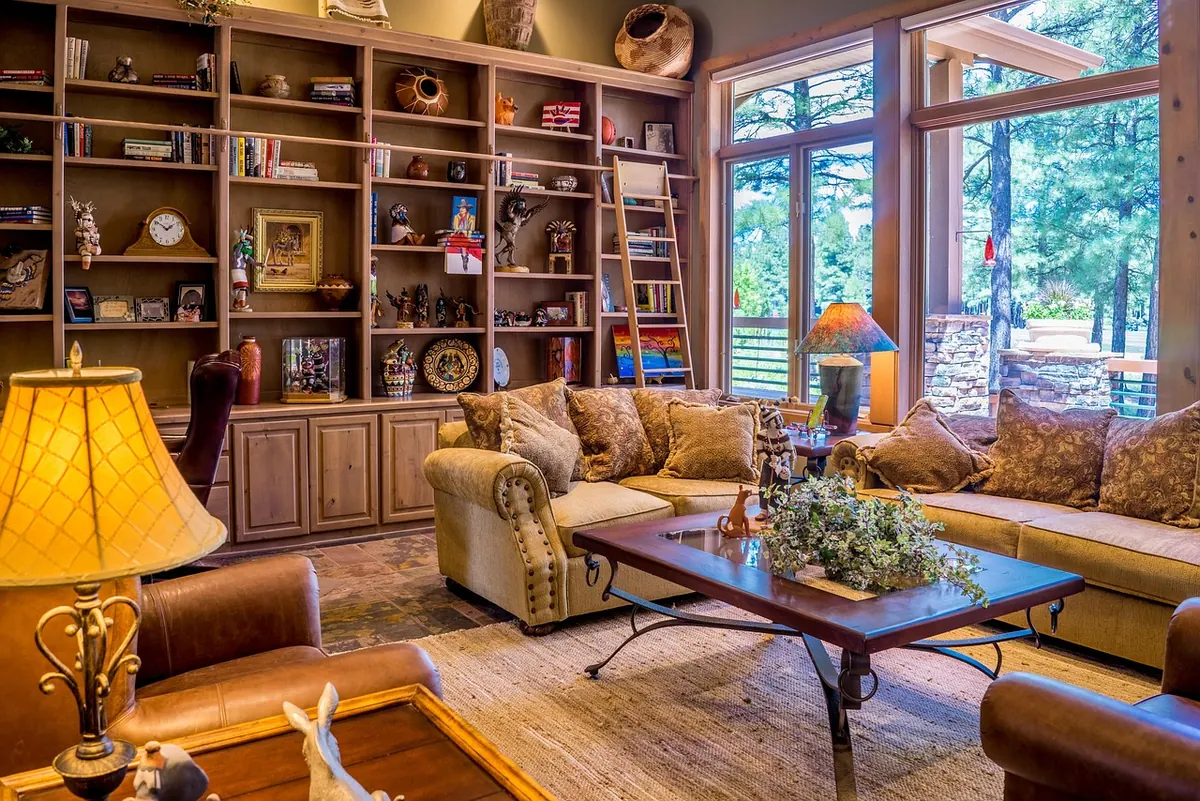
Biophilic design sounds like something you would need a consultant to explain. In practice it is the opposite: the deliberate business of letting daylight, living things and honest materials into a building, then getting out of their way. The word comes from biophilia, popularised by the biologist E.O. Wilson, and describes the pull we feel towards natural systems. Applied to a home, it is less a decorating style than a set of priorities — and it works just as well in a Victorian terrace as in a new-build flat.
What biophilic design actually means
It is usually described in three strands, and knowing them stops the whole idea turning into a shopping list.
- Nature in the space: daylight, plants, water, fresh air, materials that were recently alive.
- Natural analogues: wood grain, wool, stone, leaf patterns and gentle curves instead of hard corners.
- Nature of the space: somewhere to look out from, and somewhere to feel tucked into — a view down the garden, a chair in a corner with a thick curtain behind it.
The aim is not to fill a room with ferns. It is to make a room that behaves a little more like the outdoors: brighter when you need it, calmer to sit in, and pleasant to touch. A flat with six plants and the curtains permanently drawn is not biophilic; it is just full of plants.
Start with daylight
In a country where December afternoons end before four o'clock, light is the part worth fighting for. Go round the main rooms and take down anything that blocks it: nets, heavy pelmets, a stack of books on the sill, a sofa pushed against the window. A sheer voile gives privacy without swallowing the afternoon.
Pale paint on the window reveal, the ceiling and the wall opposite the window bounces light back into the room. A mirror hung to catch the garden does the same, provided it reflects something worth seeing rather than the television. When the sun does appear, do not waste it: put the chair, the desk or the dining table where the light actually lands.
In winter, layer your lighting. One overhead bulb in a dark room feels like an office; two or three lamps at different heights feel like a home. Warm-white bulbs suit timber and linen far better than cool ones.
Plants that survive a British winter indoors
Most houseplant deaths are caused by kindness. Water less than you think, make sure every pot has drainage, and empty the saucer afterwards. Rotate each plant a quarter turn every week so it does not lean permanently towards the glass.
- Snake plant and ZZ plant: the most forgiving choices for a north-facing room.
- Spider plant and devil's ivy: happy in ordinary light, quick to grow, easy to propagate.
- Peace lily: useful in a dim bathroom, but keep it away from pets.
- Herbs: rosemary, thyme and mint on a kitchen windowsill give you scent, greenery and dinner.
If you have cats or dogs, check before you buy — several popular houseplants, including peace lily and devil's ivy, are toxic to animals if chewed. For a seasonal lift, a bowl of forced hyacinths in January is hard to beat, and a jug of eucalyptus stems lasts for weeks.
Texture, scent and sound
Natural materials do the quiet work here: oak, ash, cork, wool, linen, jute, terracotta, unglazed tile, limewash, stone. Choose a surface because you want to touch it, not because it photographs well. A wool throw on a linen sofa and a wooden stool beside a stone worktop will do more for a room than any amount of leaf-print wallpaper.
Hard floors and bare walls bounce noise, which is tiring in a way people rarely notice until it stops. Rugs, curtains, upholstery and yes, plants, all soften it. Scent matters too: beeswax polish, cedar, lavender on a shelf, and the simple act of opening a window for ten minutes even in February to change the air.
A room can look natural and still feel like an office. Touch and sound are usually what give it away.
Views, window boxes and borrowed scenery
If you have a view, frame it. Clean the glass, clear the sill, and plant something outside the window you look through most — a hardy perennial, a pot of bulbs, a climber on a trellis. A bay or a small acer in a generous pot gives you greenery at eye level, though anything in a container needs more watering than you expect.
If the view is a brick wall, hang a mirror at an angle to catch the sky, or group two or three botanical prints where your eye naturally rests. A badly blown-up photograph of a forest rarely convinces anyone; a good small print, well framed, does.
Making it work in rentals and dark rooms
If you rent
You still have plenty of scope without touching the walls. Tension rods for curtains, freestanding shelves, plant stands, over-door hooks and clamp-on window boxes all come down again without a mark. Ask before painting, and if the answer is yes, choose a warm off-white rather than the grey you will see everywhere else.
If the room faces north
Northern light is even and cool, which suits plants from the list above and any activity that involves a screen. Warm it up with creamy walls, timber, brass or terracotta, and avoid charcoal and blue-grey in a room that never sees sun.
If the walls are damp
Leave a gap between furniture and exterior walls, use the extractor fan, and air rooms daily. A cluster of thirsty plants in a small bathroom can add to the condensation, so keep them off windowsills where mould likes to start. Persistent damp is a job for a surveyor or damp specialist, not a decorating decision.
A simple way to start
- Sit in the room you use most, at the time of day you use it, for five minutes. Notice where you avoid going.
- Clear the windowsill and take down one thing that blocks light.
- Move a chair or a lamp so that it faces the brightest part of the room.
- Add one plant you can realistically keep alive, and one material you like the feel of.
- Open a window for ten minutes a day, whatever the weather.
None of that costs much or requires permission. Biophilic design works by accumulation: a brighter corner this month, a better chair next, a pot of bulbs in the new year. Do one thing at a time and the room will start to feel less like a box and more like somewhere you chose to be.
Photo: bedrck / Pixabay